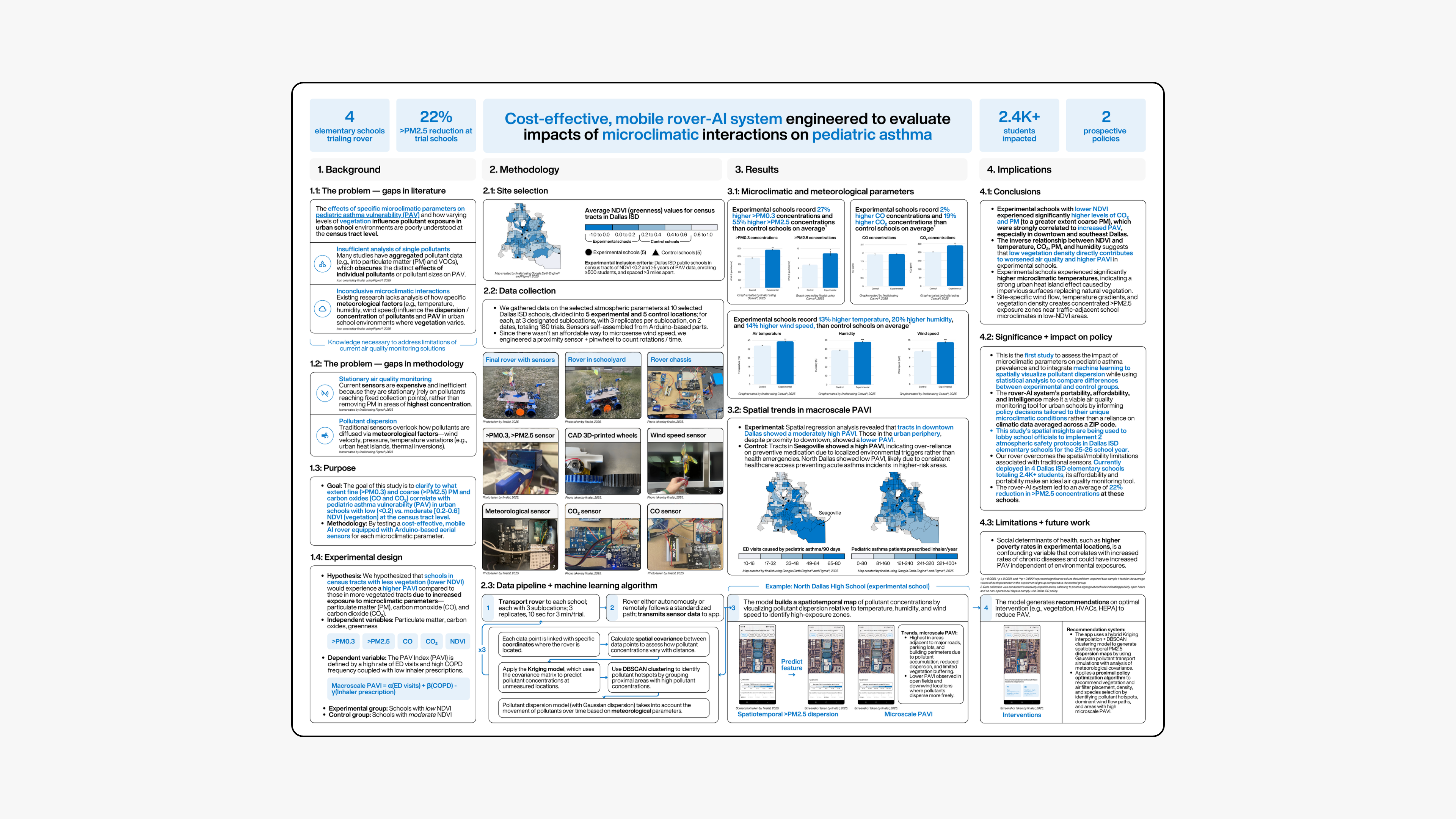
Experimental schools with lower NDVI experienced significantly higher levels of PM (to a greater extent coarse PM [>PM2.5]), which were strongly correlated to increased PAV, especially in downtown and southeast Dallas.
Higher concentrations of fine, and to a greater extent, coarse PM in experimental locations suggest that areas with lower vegetation cover experience elevated air pollutant levels. Vegetation filters and traps PM through their stomata or absorbs them through leaf cell membranes, after which it can be released through a process called resuspension, which is often dictated by wind speed. In areas with dense vegetation, PM is more likely to be captured before it can contribute to harmful exposure levels, while in low-vegetation areas, reduced filtration can result in higher coarse PM levels. The data indicate that coarse particles (>PM2.5) were elevated to a greater extent than fine particles (>PMO.3), potentially because they are more easily trapped by vegetation due to their larger size. The lack of vegetation in experimental schools could allow these larger particles to remain suspended longer.